
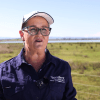

In the Lockyer Valley, we don’t just talk about resilience, we live it.
The floods of 2011 and 2013 devastated our region. They left deep scars on our landscape and communities, and the recovery continued long after the water receded.
That’s why Resilient Rivers Southeast Queensland was launched. After the floods, the Council of Mayors (SEQ) came together with a shared vision to protect our agriculture, safeguard our drinking water and ensure our waterways remain resilient and healthy for generations to come.
Spinifex is an opinion column. If you would like to contribute, contact us to ask for a detailed brief.
The initiative is backed by more than $40 million through the SEQ City Deal, a partnership between the Australian Government, Queensland Government, and the Council of Mayors (SEQ).
At its heart, Resilient Rivers SEQ is about collaboration, coordination and cooperation. It brings together all three levels of government, industry, science and communities.
The reality is that what happens upstream, for instance, here in the Lockyer Valley, directly affects what happens downstream at Mt Crosby treatment plants, which can produce up to 100 megalitres of water a day, supplying drinking water to Brisbane and Ipswich.
Now, a new, two year program is underway, spanning the region’s 16,000 kilometres of rivers and waterways from Noosa River in the north to Lockyer Creek and Albert River in the south.


It’s the largest coordinated program of waterway and habitat revitalisation since the initiative was first established. The bold, new program will rehabilitate more than 115 hectares, or 161 soccer fields, of native habitat with 200,000 new native plants.
This will prevent more than 16,000 tonnes of sediment from entering our waterways each year. That’s more than 21,000 ute loads of sediment kept out of rivers and Moreton Bay.
The program draws on the Queensland Government’s aquatic ecosystem rehabilitation process to take a whole of system, values based approach that guides planning, prioritisation, and action across our waterways.
This underpins all our work, helping us tailor local solutions for long-term environmental, social, and economic outcomes for our communities across the region. Using this approach, we aim to do more than simply treat a symptom of a wider problem.
Our goal is to prioritise actions that protect, maintain and enhance ecosystem services provided by the region’s waterways and wetlands, such as food production, clean drinking water and biodiversity. These natural assets are what make Southeast Queensland a great place to live, work and play.

Grassroots efforts are key to the program’s approach, combining community-led efforts with collaborative partnerships built by Resilient Rivers catchment coordinators between landholders, rangers, community groups and other stakeholders across work, including invasive species management, revegetation and property management planning.
We’re embracing nature-based flood management, using riparian vegetation and floodplain connectivity to slow floodwaters and encourage groundwater recharge.
In Lockyer, we’ll be reducing floodplain erosion along lower Lockyer Creek by planting 5000 native species and partnering with landholders to strengthen regional water security and prevent around 1000 tonnes of sediment from entering the creek each year.
These solutions are central to the program’s flood resilience work, offering cost-effective, environmentally sustainable and locally focused outcomes, with benefits that flow far beyond our council’s boundaries.
Benefits from nature-based flood solutions include improved water quality, healthier waterways, enhanced in-stream habitats and biodiversity, improved climate resilience and less sediment flowing downstream into our rivers and Moreton Bay.
We’re also rehabilitating 30 hectares adjacent to Seven Mile Lagoon, home to more than 150 bird species, including migratory birds. More than 10,000 native plants will support local wildlife, including koalas, reptiles and of course, our wonderful birdlife in this area.
These efforts go a long way towards building flood resilience. But they go beyond this too, supporting biodiversity, ecotourism, and the natural beauty that makes our region so special.
What sets the program apart is its values-based, whole-of-system approach. It’s not just about fixing one creek or planting one tree; it’s about connecting catchments, councils and communities.
Resilient Rivers SEQ is more than just a project; it’s a legacy. This is a generational commitment where all three levels of government work hand in hand with our community and stakeholders. Together, we’re building resilience for our children’s children.
In Lockyer Valley, it’s long felt like mother nature has taken from us. But through Resilient Rivers SEQ, mother nature is giving back to a community, where once it delivered loss and devastation. And we’re ready—with a shared commitment to a resilient future.
Mayor Tanya Milligan will be attending the International River Symposium for a master class on harnessing the power of regional collaboration for real-world impact.

